

Asset Integrity and Reliability Services for Industrial Facilities
RIDA T.S. provides asset integrity, reliability and industrial digitalization services for operating facilities in Libya.
Our teams support asset owners with inspection planning, equipment condition assessment, corrosion monitoring, risk-based inspection, leak detection, reliability analysis and the organization of technical asset data.
These capabilities are applied across oil and gas facilities in Libya, including production plants, pipelines, process equipment, storage systems, utility units and other safety- or production-critical assets.
Each scope is developed around the installed equipment, operating conditions, available inspection history, identified degradation mechanisms, client requirements and applicable technical standards.
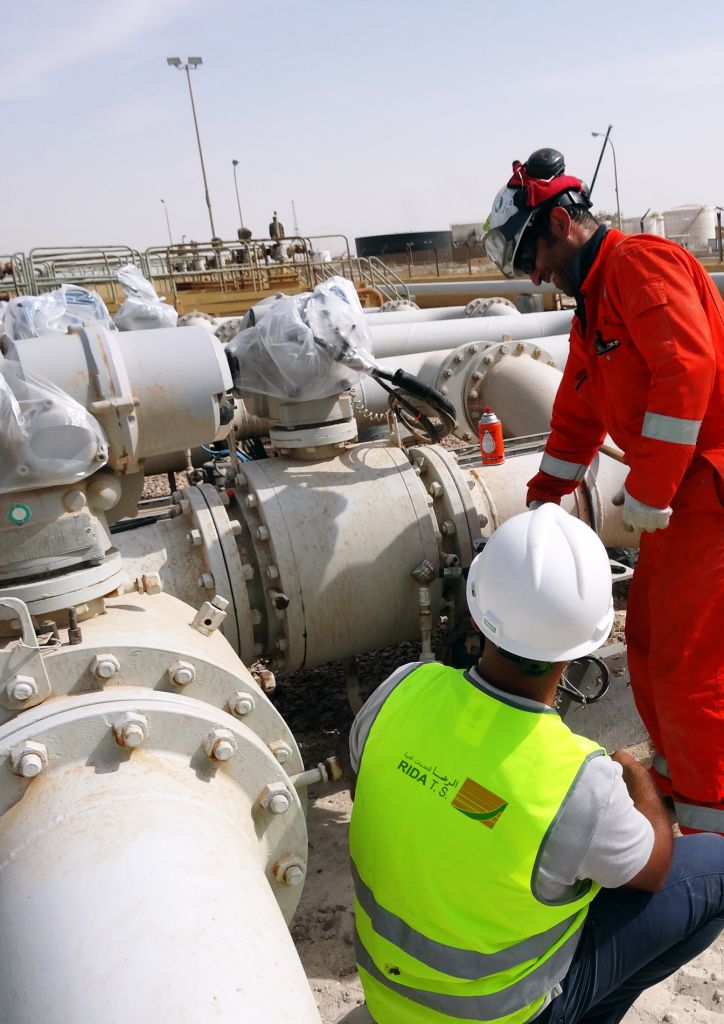
Capabilities:
Risk-Based Inspection (RBI)
We implement Risk-Based Inspection (RBI) strategies to prioritize maintenance efforts where they are needed most. By assessing the probability and consequence of failure, we optimize inspection intervals, reducing downtime while maintaining the highest safety standards.
Integrity Management Systems
We deploy comprehensive Integrity Management Systems (IMS) that cover the entire asset lifecycle. Our framework ensures that your physical assets remain fit for service under all operating conditions, extending their lifespan and ensuring regulatory compliance.
Leak Detection Systems (LDS)
We install and maintain advanced Leak Detection Systems (LDS) for pipelines and tanks. Using real-time monitoring technology, we help you detect and locate leaks instantly, minimizing environmental impact and product loss.
Corrosion monitoring
Our corrosion monitoring services utilize intrusive and non-intrusive techniques to track material degradation. We provide actionable data on corrosion rates, allowing for timely chemical treatment or repair before structural integrity is compromised.
Digital twins
We create Digital Twins of your physical assets to simulate performance and predict future behavior. This virtual replica allows for scenario testing and operational optimization without risking the actual equipment, driving data-led efficiency.
Condition monitoring & NDT
We offer condition monitoring and Non-Destructive Testing (NDT) to assess equipment health without disruption. Techniques like vibration analysis and thermography reveal hidden defects, enabling proactive maintenance interventions.
Predictive analytics & dashboards
We utilize predictive analytics and custom dashboards to visualize complex operational data. By identifying patterns and trends, we empower your team to foresee potential failures and make informed, proactive maintenance decisions.
Integrated Asset Integrity Scope
RIDA T.S. supports the development and execution of integrity programmes covering the principal stages between asset-data collection and corrective action.
Depending on the project, the scope may include:
- Collection and review of design and operating information
- Asset-register development or validation
- Equipment hierarchy and technical-data structuring
- Identification of critical equipment and systems
- Review of inspection and maintenance history
- Identification of credible degradation mechanisms
- Equipment criticality and risk ranking
- Inspection-plan development
- Selection of inspection and monitoring methods
- Review and classification of anomalies
- Preparation of engineering and maintenance recommendations
- Integrity-performance reporting
- Tracking of actions and outstanding findings
- Periodic review of the integrity programme
When an integrity finding requires calculations, equipment modification or additional technical studies, the work can be coordinated with RIDA T.S.’s engineering and consultancy services.
Risk-Based Inspection and Inspection Planning
RIDA T.S. supports Risk-Based Inspection studies for pressure equipment, piping systems, tanks and other industrial assets.
The assessment combines available design data, current operating conditions, inspection history, expected damage mechanisms and the potential consequences of equipment failure.
RBI activities may include:
- Equipment data collection and validation
- Review of process and operating conditions
- Damage-mechanism identification
- Review of previous inspection findings
- Probability-of-failure assessment
- Consequence evaluation
- Equipment risk ranking
- Review of existing inspection intervals
- Selection of appropriate inspection methods
- Development of equipment inspection plans
- Definition of reassessment requirements
- Preparation of RBI registers and reports
The resulting inspection plan identifies the equipment requiring priority attention, the proposed inspection methods and the basis for the recommended inspection intervals.
The methodology and assessment level are defined according to the equipment population, quality of available data, project requirements and applicable integrity procedures.
Condition Monitoring and Non-Destructive Testing
RIDA T.S. coordinates condition-monitoring and NDT activities according to the asset type, material, accessibility, operating conditions and expected degradation mechanisms.
The inspection scope may include:
- Visual inspection
- Ultrasonic thickness measurement
- Ultrasonic flaw detection
- Magnetic particle testing
- Dye penetrant testing
- Radiographic testing
- Hardness testing
- Thermographic inspection
- Vibration monitoring
- Mechanical-condition checks
- Coating and surface-condition assessment
- Electrical-condition monitoring
Inspection results are reviewed against the available technical information, previous measurements and the acceptance criteria defined for the project.
Identified anomalies are recorded and classified to support further inspection, engineering assessment, repair planning, equipment replacement or continued monitoring.
NDT methods, procedures and personnel qualification requirements are confirmed through the approved project documentation.
Corrosion Monitoring and Management
RIDA T.S. supports corrosion-monitoring programmes for piping, pipelines, vessels, tanks and industrial process equipment.
The work is based on equipment materials, process conditions, contaminants, operating history, chemical treatment and the degradation mechanisms associated with the service.
Depending on the project, activities may include:
- Review of materials and process conditions
- Identification of corrosion mechanisms
- Definition of corrosion circuits and loops
- Review of thickness-monitoring locations
- Ultrasonic thickness monitoring
- Corrosion coupon coordination
- Corrosion-probe integration
- Coating-condition assessment
- Review of chemical-treatment information
- Analysis of corrosion-rate trends
- Identification of areas requiring further examination
- Preparation of monitoring and corrective-action recommendations
Results are consolidated with inspection history and operating information to support decisions on inspection frequency, repair requirements, material replacement and corrosion-control measures.
Leak Detection Systems
RIDA T.S. supports the engineering and integration of leak-detection solutions for pipelines, tanks and process systems.
System configuration is developed according to the transported product, equipment arrangement, operating envelope, instrumentation availability and required operator response.
Depending on the application, the solution may incorporate:
- Pressure and flow monitoring
- Mass-balance calculations
- Rate-of-change analysis
- Acoustic monitoring
- Point gas or liquid detection
- Distributed sensing technologies
- Alarm and event management
- Historical trend analysis
- SCADA and control-system interfaces
Engineering activities include review of the detection objective, available field signals, operating scenarios, communication requirements, alarm thresholds and interface with existing control infrastructure.
Leak-detection information can be integrated into the facility’s automation, SCADA and control systems to provide centralized monitoring, alarm management and operator visibility.
Detection capability and acceptance criteria are established individually for each project and technology.
Reliability Engineering and Maintenance Optimization
RIDA T.S. supports reliability studies and maintenance-strategy reviews for critical industrial equipment and systems.
The scope may include:
- Asset criticality analysis
- Failure-mode review
- Failure Modes and Effects Analysis
- Reliability-Centred Maintenance support
- Preventive-maintenance task review
- Maintenance-interval assessment
- Bad-actor equipment identification
- Root-cause analysis support
- Equipment availability and downtime review
- Spare-parts criticality assessment
- Maintenance KPI development
- Maintenance-plan improvement
The review connects equipment function, condition, criticality, failure behaviour and maintenance history to identify activities requiring adjustment or further investigation.
Approved recommendations can be transferred into RIDA T.S.’s operations and maintenance services for preventive maintenance, corrective work, equipment overhaul, shutdown execution and CMMS-based work management.
Integrity Findings and Corrective Actions
Inspection and monitoring findings are recorded and translated into traceable engineering or maintenance actions.
Depending on the condition identified, recommendations may include:
- Continued operation with monitoring
- Modification of the inspection interval
- Additional examination
- Engineering assessment
- Review of process or operating conditions
- Repair planning
- Component replacement
- Equipment modification
- Maintenance-task revision
- Shutdown-scope inclusion
- Long-term condition monitoring
Each recommendation should identify the affected asset, observation, technical basis, proposed action, responsibility and required completion date.
Where replacement equipment, instruments or specialist components are required, sourcing can be coordinated through RIDA T.S.’s procurement and supply chain management services.
RIDA T.S. can also provide technical training and capability development covering inspection activities, equipment condition, maintenance practices and the use of integrity-management information.
Asset Integrity Applications
RIDA T.S. supports asset integrity and reliability requirements across:
- Oil and gas production facilities
- Gas-oil separation plants
- Pipelines and gathering systems
- Refineries and process plants
- Storage tanks and terminals
- Pressure vessels
- Process and utility piping
- Pumps and compressors
- Heat exchangers
- Fired equipment
- Metering and control stations
- Water-treatment facilities
- Power-generation infrastructure
- Industrial electrical and control systems
The integrity strategy, inspection methods, monitoring technologies and data requirements are adapted to the facility, equipment type, operating environment and approved project objectives.
Relevant Industrial Experience
Gas-Oil Separation Plant Cleaning and Inspection
RIDA T.S.’s field experience includes the cleaning and inspection of a Gas-Oil Separation Plant.
The project involved industrial cleaning and inspection activities supporting equipment-condition assessment within an operating oil and gas facility.
Crude Oil Heaters Control System Upgrade
The Upgrade of Crude Oil Heaters Control System covered system architecture, local control-cabinet assembly, PLC software programming, field-sensor calibration, safety interlocking, loop testing and commissioning.
The project demonstrates RIDA T.S.’s ability to combine field instrumentation, industrial automation and control-system modernization for critical thermal assets.
Additional inspection, engineering, automation and industrial maintenance references are available in the RIDA T.S. project portfolio.
Standards and Technical Requirements
Asset integrity and reliability activities are performed against the client specifications, regulatory requirements and technical standards applicable to the equipment and facility.
Asset-management principles may reference ISO 55000:2024, which addresses asset-management terminology, principles and lifecycle management.
For petroleum, petrochemical and natural gas facilities, the structure and exchange of equipment reliability and maintenance information may refer to ISO 14224.
Project-specific documentation may also identify applicable requirements for pressure equipment, pipelines, tanks, corrosion control, inspection methods, NDT personnel qualification, functional safety and industrial cybersecurity.
The applicable standards, editions, inspection procedures and acceptance criteria are confirmed for each project. Reference to a standard does not constitute a declaration of certification or universal compliance.
Al-Noflieen Area, P.o.box 536, Tripoli Libya
info@rida-ts.com
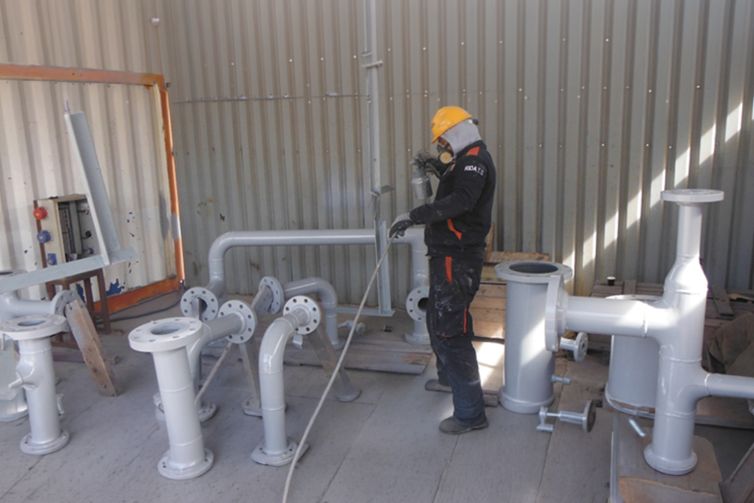
During a critical service overhaul, this project executed the tie-in activities for six flowmeters
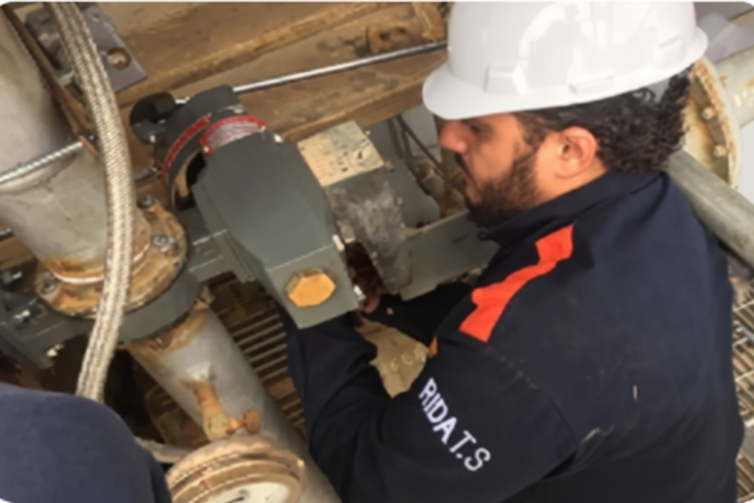
Hardware refitting, automation logic configuration, interface updating, and operational loop testing.